A briefing for Secretary Pete Hegseth • Department of Defense
It takes a leader to go first.
The biggest problem is not the science. It is that no one wants to be first, and no one on a base has the authority to change that.
On every military installation, review staff know how to evaluate a product. They will not take a new technology to their superiors without authority and credibility behind them. Institutions are built to avoid that risk. It takes a leader with vision for innovation to authorize a test. Surface Protection Labs is confident in what that test will show, and this can be deployed immediately where it is of critical use.
Prepared for Secretary Pete Hegseth, U.S. Department of Defense, by Jeffrey Loper, Managing Partner, Surface Protection Labs, a joint venture with SG24 LLC.
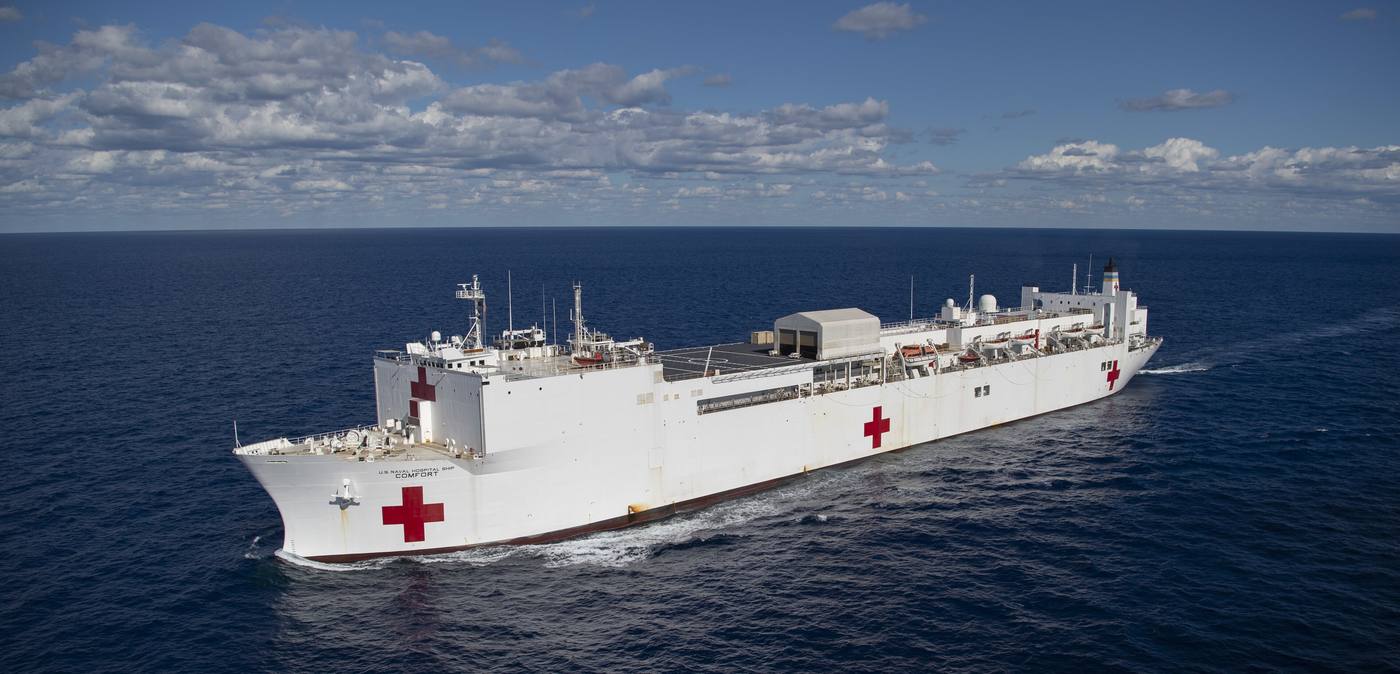
Photo: U.S. Navy Medicine, public domain
Watch the briefing
A message for the Department of Defense
A short briefing on the authorization problem, force protection and readiness, and the 90-day pilot we are asking Secretary Hegseth to authorize.
Force readiness and protection
Force protection starts with the surfaces our people touch.
The Department of Defense already treats infectious disease, both naturally occurring and deliberate, as a readiness problem. Barracks, ships, training centers and military treatment facilities put people in close quarters with shared surfaces, and a sick unit is a unit that can’t deploy.
Posture and preparedness
The 2023 DoD Biodefense Posture Review sets requirements across chemical-biological defense, the Defense Health Program and biosurveillance, for both deliberate and natural biological threats.12,13,14
Military hospitals and clinics
Military treatment facilities run infection-prevention programs and report healthcare-associated infections to CDC’s national system, the same one civilian hospitals use.15,16
Infections among recruits
A CDC-published outbreak of 235 community-acquired MRSA infections among military recruits at a single training facility, linked to close contact and the demands of training.17
Shipboard outbreaks
MRSA cases have been documented aboard a naval ship, and Navy medicine treats norovirus as a leading cause of outbreaks in shipboard and other close living quarters.18,20
Higher-risk living
Defense health guidance lists service members living in barracks among groups at higher risk for MRSA, because of crowding and shared items.19
Keep key facilities running
Command centers, aircraft, vehicles, gyms, galleys and medical spaces are high-touch environments where an added surface layer can be evaluated quickly, alongside existing cleaning.
The proposal is an evaluation. SurfaceGuard90 has not been adopted or endorsed by the Department of Defense.
The product
SurfaceGuard90: a layer that stays after the cleaning crew leaves.
SurfaceGuard90, from SG24 LLC, is a water-based organosilane coating. After cleaning, it is applied to hard and soft surfaces, where it bonds and dries into an invisible microbiostatic layer.
How it works: physical, not a poison
- Anchors. A silane base bonds the molecule to the surface as it dries.
- Forms a layer. The cured coating is an invisible, positively charged layer about one molecule deep.
- Stays put. SG24 describes it as non-volatile and non-leaching: it works while bound to the surface, does not give off gases, and is not washed off by normal cleaning.29,24
- Inhibits growth of odor-causing and stain-causing bacteria, mold, mildew and algae on treated surfaces21
- Bonds to porous and non-porous surfaces, including fabrics such as curtains, bedding, upholstery and carpet21
- Stays on the surface after cleaning, and normal cleaning and disinfection continue on schedule22,24
- Reapplied about every 90 days (the label says every three months, or when odor or staining returns)21
- Labeled use sites include hospitals, ships, airplanes, buses, trains, schools and correctional facilities21
- Water-based, ready to use or concentrate, from 1-gallon jugs to 275-gallon totes23
Applied in hours, by existing crews
Clean the surface first, then apply. SG24’s directions recommend electrostatic spraying, at about one gallon per 1,000 cubic feet when fogging.22 Treated areas are dried before use.
What the product label says
“Provides an invisible micro biostatic coating to inhibit the growth of odor causing bacteria, bacteria which cause staining and discoloration, fungi (mold and mildew), and algae.”21
SurfaceGuard90 is not a cleaner, disinfectant or sanitizer and does not replace them. Its label does not claim protection against disease-causing bacteria or viruses. Product claims on this site are limited to the label. The current product label and safety documentation will be provided to every pilot site before application.
SG24’s military program
Military Safe: what SG24 reports about fabrics and field use.
SG24 LLC, the maker of SurfaceGuard90, describes a Military Safe program for military settings. The statements in this section are SG24’s, and they are offered here as the manufacturer’s account of where and how it has prepared the product to be used.
Tested on military textiles
SG24 reports that the coating has been tested on military fabrics, including Nomex, Gore-Tex and Kevlar, and that it is intended to work with existing uniform treatments.39
Where SG24 points the program
SG24 lists uniforms, barracks, offices, military transportation, clinics, hospitals, mortuary affairs and disaster support among the program’s intended settings.39
Hard and soft surfaces
The product label includes ships and hospitals among use sites and states that the coating bonds to porous and non-porous surfaces, including fabrics.21
These are company descriptions, not a Department of Defense evaluation, certification or endorsement. This page does not treat them as independently published trial results. A supervised pilot is how those claims should be examined in operational settings.
Deployment logistics
Applied after standard cleaning, without replacing it.
A military pilot does not require a new cleaning system. Trained crews apply SurfaceGuard90 to agreed surfaces after the facility’s usual cleaning, then normal cleaning and disinfection continue on schedule.
Spray, electrostatic, wipe or fog
SG24’s directions recommend electrostatic spraying, at about one gallon per 1,000 cubic feet when fogging. Treated areas are dried before use.22
Hard surfaces and fabrics
High-touch surfaces in treatment facilities, barracks and ships, plus agreed fabrics such as bedding, curtains or, where a site elects, uniforms, consistent with the label.
About every 90 days
The label calls for reapplication every three months, or when odor or staining returns.21 Matched untreated areas in the same facility give the comparison.
Name a point of contact, and application can begin within 30 days of site selection and local product-review sign-off. Chemical volumes and cleaning frequency can be tracked alongside surface sampling, so each command can see what changed and what did not.
An offer to the United States
A partnership with the United States.
Surface Protection Labs is open to the U.S. government taking an equity position in this work, as it has in other industries it treats as strategic, including semiconductors and critical minerals. A government partnership would also keep deployment under control, reserved for the institutional settings where it is needed.
An equity position, open to discussion
In 2025 and 2026 the United States took, or agreed to take, positions in companies it judged important to national capacity: a roughly 10 percent common-stock holding in Intel, converted from CHIPS Act and related funding;32 a preferred-stock and warrant package in MP Materials that, if converted and exercised, would equal about 15 percent;33 warrant positions tied to a Department of Energy loan for Lithium Americas;34 a roughly 10 percent common-stock investment, with warrants, in Trilogy Metals;35 and a single preferred “golden share” in U.S. Steel, used for governance rather than economic ownership.36 Surface Protection Labs is prepared to discuss a similar partnership—a minority stake, roughly in the range of 10 to 15 percent, or another structure such as warrants or a golden share. No percentage is fixed. The terms are open to discussion with the Departments that would authorize and oversee a pilot.
A controlled, institutional technology
This is not a product for mass consumer marketing. Surface Protection Labs intends to deploy SurfaceGuard90 quietly, as a controlled institutional technology, in military facilities, hospitals and other critical-infrastructure settings. Widespread consumer use of antibacterial wash products is a cautionary example. In 2016, the Food and Drug Administration issued a final rule under which 19 active ingredients, including triclosan and triclocarban, could no longer be marketed in over-the-counter consumer antiseptic washes, because manufacturers had not shown those ingredients were safe for long-term daily use and any more effective than plain soap and water.37 In that rulemaking, FDA also identified the potential effect of widespread antiseptic use on the development of bacterial resistance as a safety question that had to be evaluated.38 Those are antimicrobial-stewardship concerns about consumer antibacterial products in general. They are not a claim about SurfaceGuard90. The responsible course is to reserve this coating for supervised institutional use, not to put it on every household surface.
Why a government partner matters
A government equity position, together with the authorization to run a measured pilot, keeps deployment where the risk of surface recontamination after cleaning is highest: military treatment facilities, ships, barracks, hospitals and other critical infrastructure. It also gives the United States a direct interest in seeing that the technology is used carefully, and not pushed into an uncontrolled commercial market.
This offer is made by Jeffrey Loper, Managing Partner of Surface Protection Labs, a joint venture with SG24 LLC.
Our request to Defense
Deploy now: authorize a supervised 90-day military pilot.
We are asking Secretary Hegseth for three things.
- Authorize a supervised 90-day deployment pilot at selected military facilities.
- Measure the results independently, with treated and untreated surfaces compared side by side.
- Set the standard. If the results hold, issue guidance that makes ongoing surface protection part of infection control and readiness practice, not just constant cleaning and sanitation.
Military facilities
Selected military treatment facilities, barracks and ships, plus a training center where close quarters make the comparison clear.
How the 90 days run
- 1Weeks 0–2
Select sites
The Department names a lead and two to five sites. Each site’s product-review team signs off.
- 2Weeks 2–4
Clean & apply
Trained crews apply SurfaceGuard90 after standard cleaning, by electrostatic spray, wipe or fog, on agreed high-touch surfaces and fabrics. Matched untreated areas serve as comparisons.
- 3Days 0–90
Measure
An independent reviewer oversees scheduled surface sampling, odor, staining and mold checks, cleaning-chemical use and frequency, and any facility measures the site chooses.
- 4Day 90+
Decide & set the standard
Results are published to the Department. If they hold, guidance makes ongoing surface protection part of practice, on a 90-day reapplication cycle.
One decision starts it
Name a point of contact, and we can begin within 30 days.
Who we are
A joint venture built to deploy.
Surface Protection Labs
Brings SurfaceGuard90 to hospitals, health systems and military facilities, and organizes pilot sites, application crews and measurement. Managing partner: Jeffrey Loper.
SG24 LLC
The company behind SurfaceGuard90, offering “persistent protection since 2014.” Product information, directions and packaging are at SurfaceGuard90.com.23
“During the pandemic I searched for a way to protect the passengers and drivers of a transportation business. That search led me to SurfaceGuard90. Now it’s time to put it to work where it matters most.”
— Jeffrey Loper, Managing Partner, Surface Protection Labs
Contact
Ready to deploy.
One call starts the pilot.
Sources
References
- U.S. Department of Defense. 2023 Biodefense Posture Review. media.defense.gov
- DoD Directive 6420.02, DoD Biosurveillance (2020, Change 1 2024). esd.whs.mil
- DoD. Chemical and Biological Defense Program Enterprise Strategy release. defense.gov
- Air Force Instruction 44-108, Infection Prevention and Control Program. e-publishing.af.mil
- Navy BUMEDINST 6220.9B, Healthcare-Associated Infection Prevention and Control Program. med.navy.mil
- Zinderman CE, et al. Community-acquired methicillin-resistant Staphylococcus aureus among military recruits. Emerg Infect Dis, 2004. wwwnc.cdc.gov/eid
- LaMar JE, et al. Sentinel cases of community-acquired MRSA onboard a naval ship. Mil Med, 2003. pubmed.ncbi.nlm.nih.gov/12636142
- Defense Health Agency, Army Public Health. Outbreaks of military concern. ph.health.mil
- Navy and Marine Corps Force Health Protection Command. Norovirus illness. med.navy.mil
- SurfaceGuard90 RTU product label (gallon), SG24 LLC. sharecorp.com
- SG24 LLC. SurfaceGuard90 RTU Directions for Use. surfaceguard90.com
- SG24 LLC. SurfaceGuard90 product site. surfaceguard90.com
- SG24 LLC. SurfaceGuard90 FAQ. surfaceguard90.com/FAQ.html
- SG24 LLC. SurfaceGuard90: the chemistry. surfaceguard90.com/chemistry2.html
- Intel Corporation. Intel and Trump Administration Reach Historic Agreement to Accelerate American Technology and Manufacturing Leadership, 22 Aug 2025. intc.com
- MP Materials. Announces Transformational Public-Private Partnership with the Department of Defense to Accelerate U.S. Rare Earth Magnet Independence, 10 Jul 2025. investors.mpmaterials.com
- U.S. Department of Energy. Department of Energy Restructures Lithium Americas Deal to Protect Taxpayers and Onshore Critical Minerals, 30 Sep 2025. energy.gov See also Lithium Americas, 1 Oct 2025. lithiumamericas.com
- Trilogy Metals. Closes US$35.6 Million Strategic Equity Investment by the U.S. Department of War, 11 Sep 2026. trilogymetals.com See also the 6 Oct 2025 letter of intent. trilogymetals.com
- United States Steel Corporation. Form 8-K, National Security Agreement and Class G Preferred Stock (Golden Share), 13 Jun 2025. sec.gov
- FDA. Safety and Effectiveness of Consumer Antiseptics; Topical Antimicrobial Drug Products for Over-the-Counter Human Use, final rule, 81 Fed. Reg. 61106, 6 Sep 2016 (19 ingredients, including triclosan and triclocarban). federalregister.gov See also FDA, Skip the Antibacterial Soap; Use Plain Soap and Water. fda.gov
- FDA. Same 2016 consumer antiseptic-wash final rule, discussing the potential effect of widespread antiseptic use on the development of bacterial resistance. federalregister.gov
- SG24 LLC. Military Safe (company brochure). surfaceguard90.com/docs/2021/military_safe.pdf. Program description and fabric-testing statements on this page are SG24’s.