A briefing for Secretary Robert F. Kennedy Jr. • HHS
It takes a leader to go first.
The biggest problem is not the science. It is that no one wants to be first, and no one on the floor has the authority to change that.
In every hospital, review staff know how to evaluate a product. They will not take a new technology to their superiors without authority and credibility behind them. Institutions are built to avoid that risk. It takes a leader with vision for innovation to authorize a test. Surface Protection Labs is confident in what that test will show, and this can be deployed immediately where it is of critical use.
Prepared for Secretary Robert F. Kennedy Jr., U.S. Department of Health and Human Services, by Jeffrey Loper, Managing Partner, Surface Protection Labs, a joint venture with SG24 LLC.
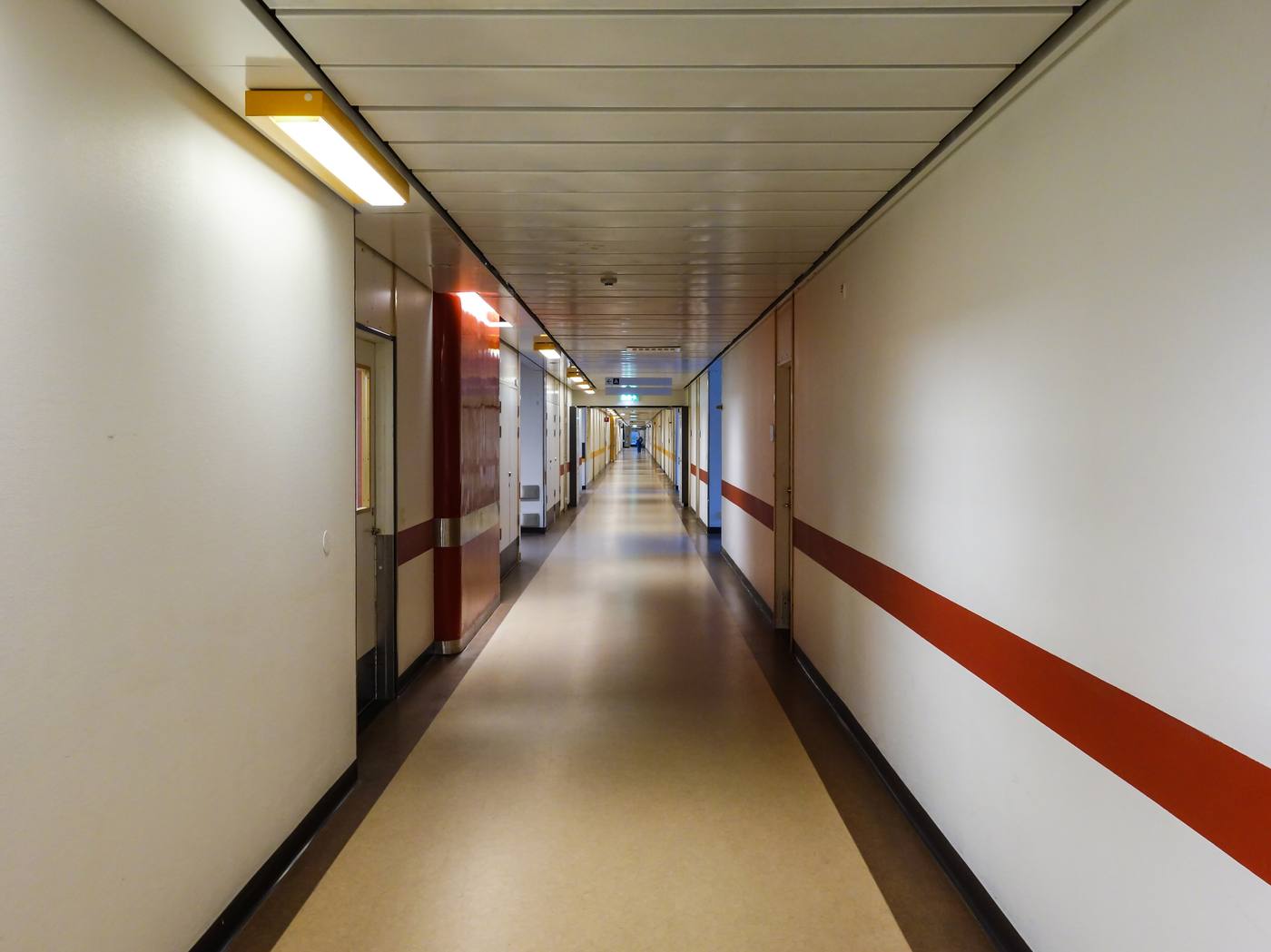
Photo: W.carter, CC0
Watch the briefing
A message for Health & Human Services
A short briefing on the authorization problem, the cost of hospital cross-contamination, and the 90-day pilot we are asking Secretary Kennedy to authorize.
The cost of the problem
Cross-contamination is a cost hospitals pay every day.
Every hospital-acquired infection carries a price: longer stays, treatment costs, Medicare penalties and liability exposure. Hospitals have made real progress, and the bill is still enormous. These are the most recent federal figures, and they are the costs a between-cleanings surface program should be measured against.
Liability and insurance exposure. Hospital-acquired infections are also a professional-liability risk that hospitals must insure against. In a 2009 industry benchmark, hospital-acquired conditions, a group that includes infections along with other patient injuries, accounted for about 1 in 4 hospital liability claims and about 24% of liability costs.11 These figures describe the cost of the problem. They are not results of SurfaceGuard90, and the pilot below is designed to measure what a treated surface does in practice.
The gap after cleaning
Surfaces are recontaminated soon after they are cleaned.
Cleaning and disinfection lower the germ load at the moment they are done. They leave nothing behind. As soon as patients, staff, equipment and air move through a room, surfaces start to be recontaminated, sometimes within hours.
Cleaning alone
Cleaning + a SurfaceGuard90 layer
Otter et al., American Journal of Infection Control, 2013Contaminated surfaces contribute to the spread of C. difficile, MRSA, VRE, norovirus and drug-resistant gram-negative bacteria. These organisms survive on dry surfaces for long periods and are hard to remove by cleaning. Patients face higher risk when the room’s previous occupant carried the same organism.1
Hardy et al., Journal of Hospital Infection, 2007After an intensive-care unit was decontaminated with hydrogen-peroxide vapour, MRSA recontaminated the environment within 24 hours of patients being readmitted.2
CDC guidance treats environmental cleaning as a core part of preventing transmission and recognizes that surfaces can be recontaminated.3
The product
SurfaceGuard90: a layer that stays after the cleaning crew leaves.
SurfaceGuard90, from SG24 LLC, is a water-based organosilane coating. After cleaning, it is applied to hard and soft surfaces, where it bonds and dries into an invisible microbiostatic layer.
How it works: physical, not a poison
- Anchors. A silane base bonds the molecule to the surface as it dries.
- Forms a layer. The cured coating is an invisible, positively charged layer about one molecule deep.
- Stays put. SG24 describes it as non-volatile and non-leaching: it works while bound to the surface, does not give off gases, and is not washed off by normal cleaning.29,24
- Inhibits growth of odor-causing and stain-causing bacteria, mold, mildew and algae on treated surfaces21
- Bonds to porous and non-porous surfaces, including fabrics such as curtains, bedding, upholstery and carpet21
- Stays on the surface after cleaning, and normal cleaning and disinfection continue on schedule22,24
- Reapplied about every 90 days (the label says every three months, or when odor or staining returns)21
- Labeled use sites include hospitals, ships, airplanes, buses, trains, schools and correctional facilities21
- Water-based, ready to use or concentrate, from 1-gallon jugs to 275-gallon totes23
Applied in hours, by existing crews
Clean the surface first, then apply. SG24’s directions recommend electrostatic spraying, at about one gallon per 1,000 cubic feet when fogging.22 Treated areas are dried before use.
What the product label says
“Provides an invisible micro biostatic coating to inhibit the growth of odor causing bacteria, bacteria which cause staining and discoloration, fungi (mold and mildew), and algae.”21
SurfaceGuard90 is not a cleaner, disinfectant or sanitizer and does not replace them. Its label does not claim protection against disease-causing bacteria or viruses. Product claims on this site are limited to the label. The current product label and safety documentation will be provided to every pilot site before application.
People and the environment
Less reliance on constant harsh-chemical re-cleaning.
Because surfaces are recontaminated so quickly, hospitals respond by cleaning again and again with stronger chemicals. That has its own cost: the health of the nurses and environmental-services crews who breathe and handle those chemicals every shift.
CDC’s National Institute for Occupational Safety and Health lists bleach, chloramines, glutaraldehyde, quaternary ammonium compounds and spray products among the cleaning exposures that can cause or trigger work-related asthma.25 The NIOSH-led review calls for an integrated approach that prevents infections and occupational illness together.28
- One bonded application, about every 90 days, instead of a coating that evaporates when it dries
- Does not give off gases or leach once cured (SG24)24
- The pilot measures it: chemical volumes and cleaning frequency are tracked, so each facility can decide on evidence whether its protocols can safely change
Normal cleaning and disinfection continue during the pilot. Any change to a facility’s cleaning protocol is decided by its own infection-prevention team.
Better for the environment, too
Disinfectant use, and the chemicals that go down the drain with it, rose sharply during the pandemic. Environmental scientists flagged the surge in quaternary ammonium disinfectants (“quats”) for its effects on wastewater, waterways and antimicrobial resistance.30 A 2023 review in Environmental Science & Technology calls quats “a chemical class of emerging concern,” found in wastewater, surface waters and sediments.31
- One bonded application about every 90 days instead of repeated wet re-application that is rinsed and mopped away
- Less chemical volume, fewer containers and less runoff are goals the pilot will measure
- Designed to stay put: SG24 describes the cured layer as non-leaching and bound to the surface24
- Water-based, with no heavy metals, arsenic, tin or phenols (SG24)23
SurfaceGuard90’s active ingredient is itself an organosilane quaternary ammonium compound, made to bond to the surface rather than wash away. Its label environmental precautions, including keeping product effluent out of waterways and sewers without authorization, apply during every application.21
How it should be used
A controlled, institutional technology—not a consumer product.
This is not something to market for every household surface. Surface Protection Labs intends to deploy SurfaceGuard90 in hospitals and other supervised institutional settings, where review teams and measurement can sit behind the work.
Widespread consumer use of antibacterial wash products is a cautionary example. In 2016, the Food and Drug Administration issued a final rule under which 19 active ingredients, including triclosan and triclocarban, could no longer be marketed in over-the-counter consumer antiseptic washes, because manufacturers had not shown those ingredients were safe for long-term daily use and any more effective than plain soap and water.37 In that rulemaking, FDA also identified the potential effect of widespread antiseptic use on the development of bacterial resistance as a safety question that had to be evaluated.38 Those are antimicrobial-stewardship concerns about consumer antibacterial products in general. They are not a claim about SurfaceGuard90. The responsible course is to reserve this coating for supervised institutional use.
Our request to HHS
Deploy now: authorize a supervised 90-day hospital pilot.
We are asking Secretary Kennedy for three things.
- Authorize a supervised 90-day deployment pilot at selected hospital units.
- Measure the results independently, with treated and untreated surfaces compared side by side.
- Set the standard. If the results hold, issue guidance that makes ongoing surface protection part of infection control, not just constant cleaning and sanitation.
Hospitals and HHS-affiliated facilities
Selected hospital units, such as ICUs and medical-surgical floors, at HHS-affiliated facilities and partner hospitals, with VA medical centers joining where the VA agrees.
How the 90 days run
- 1Weeks 0–2
Select sites
HHS names a lead and two to five sites. Each site’s product-review team signs off.
- 2Weeks 2–4
Clean & apply
Trained crews apply SurfaceGuard90 after standard cleaning, by electrostatic spray, wipe or fog, on agreed high-touch surfaces and fabrics. Matched untreated areas serve as comparisons.
- 3Days 0–90
Measure
An independent reviewer oversees scheduled surface sampling, odor, staining and mold checks, cleaning-chemical use and frequency, and any facility measures the site chooses.
- 4Day 90+
Decide & set the standard
Results are published to the Department. If they hold, guidance makes ongoing surface protection part of infection control, on a 90-day reapplication cycle.
One decision starts it
Name a point of contact, and we can begin within 30 days. Surface Protection Labs is also open to a U.S. government equity position, as the United States has taken in other strategic industries; the terms are open to discussion.
Who we are
A joint venture built to deploy.
Surface Protection Labs
Brings SurfaceGuard90 to hospitals, health systems and military facilities, and organizes pilot sites, application crews and measurement. Managing partner: Jeffrey Loper.
SG24 LLC
The company behind SurfaceGuard90, offering “persistent protection since 2014.” Product information, directions and packaging are at SurfaceGuard90.com.23
“During the pandemic I searched for a way to protect the passengers and drivers of a transportation business. That search led me to SurfaceGuard90. Now it’s time to put it to work where it matters most.”
— Jeffrey Loper, Managing Partner, Surface Protection Labs
Contact
Ready to deploy.
One call starts the pilot.
Sources
References
- Otter JA, Yezli S, Salkeld JAG, French GL. Evidence that contaminated surfaces contribute to the transmission of hospital pathogens. Am J Infect Control, 2013. pubmed.ncbi.nlm.nih.gov/23622751
- Hardy KJ, et al. Rapid recontamination with MRSA of the environment of an ICU after decontamination with hydrogen peroxide vapour. J Hosp Infect, 2007. pubmed.ncbi.nlm.nih.gov/17655959
- CDC. Environmental services, infection control. cdc.gov
- CDC. Healthcare-associated infections: reports and data. cdc.gov/healthcare-associated-infections/php/data
- Chea N, et al. Health Care–Associated Infections in U.S. Hospitals, 2023 versus 2015. N Engl J Med, 2026. doi.org/10.1056/NEJMoa2510881
- CDC. Antimicrobial Resistance Threats: MRSA (2023 estimates). arpsp.cdc.gov/artr/MRSA
- CDC. Antimicrobial Resistance Threats: C. difficile (2023 estimates). arpsp.cdc.gov/artr/cdiff
- Zimlichman E, et al. Health care–associated infections: a meta-analysis of costs and financial impact on the US health care system. JAMA Intern Med, 2013. doi.org/10.1001/jamainternmed.2013.9763
- Scott RD II (CDC). The Direct Medical Costs of Healthcare-Associated Infections in U.S. Hospitals and the Benefits of Prevention, 2009. stacks.cdc.gov
- CMS. Hospital-Acquired Condition Reduction Program. cms.gov
- Infection Control Today. HAI-related litigation: what infection preventionists need to know (summarizing the 2009 Aon/ASHRM hospital professional liability benchmark). infectioncontroltoday.com
- SurfaceGuard90 RTU product label (gallon), SG24 LLC. sharecorp.com
- SG24 LLC. SurfaceGuard90 RTU Directions for Use. surfaceguard90.com
- SG24 LLC. SurfaceGuard90 product site. surfaceguard90.com
- SG24 LLC. SurfaceGuard90 FAQ. surfaceguard90.com/FAQ.html
- CDC/NIOSH. Work-related asthma exposures (cleaning services and healthcare). cdc.gov/niosh
- Dumas O, et al. Association of Occupational Exposure to Disinfectants With Incidence of Chronic Obstructive Pulmonary Disease Among US Female Nurses. JAMA Netw Open, 2019;2(10):e1913563. jamanetwork.com
- Arif AA, Delclos GL. Association between cleaning-related chemicals and work-related asthma and asthma symptoms among healthcare professionals. Occup Environ Med, 2012;69:35–40. pubmed.ncbi.nlm.nih.gov/21602538
- Quinn MM, Henneberger PK, et al. (NIOSH-convened working group). Cleaning and disinfecting environmental surfaces in health care: Toward an integrated framework for infection and occupational illness prevention. Am J Infect Control, 2015;43(5):424–434. doi.org/10.1016/j.ajic.2015.01.029
- SG24 LLC. SurfaceGuard90: the chemistry. surfaceguard90.com/chemistry2.html
- Hora PI, Pati SG, McNamara PJ, Arnold WA. Increased Use of Quaternary Ammonium Compounds during the SARS-CoV-2 Pandemic and Beyond: Consideration of Environmental Implications. Environ Sci Technol Lett, 2020;7:622–631. doi.org/10.1021/acs.estlett.0c00437
- Arnold WA, Blum A, Branyan J, et al. Quaternary Ammonium Compounds: A Chemical Class of Emerging Concern. Environ Sci Technol, 2023;57:7645–7665. doi.org/10.1021/acs.est.2c08244
- FDA. Safety and Effectiveness of Consumer Antiseptics; Topical Antimicrobial Drug Products for Over-the-Counter Human Use, final rule, 81 Fed. Reg. 61106, 6 Sep 2016 (19 ingredients, including triclosan and triclocarban). federalregister.gov See also FDA, Skip the Antibacterial Soap; Use Plain Soap and Water. fda.gov
- FDA. Same 2016 consumer antiseptic-wash final rule, discussing the potential effect of widespread antiseptic use on the development of bacterial resistance. federalregister.gov